


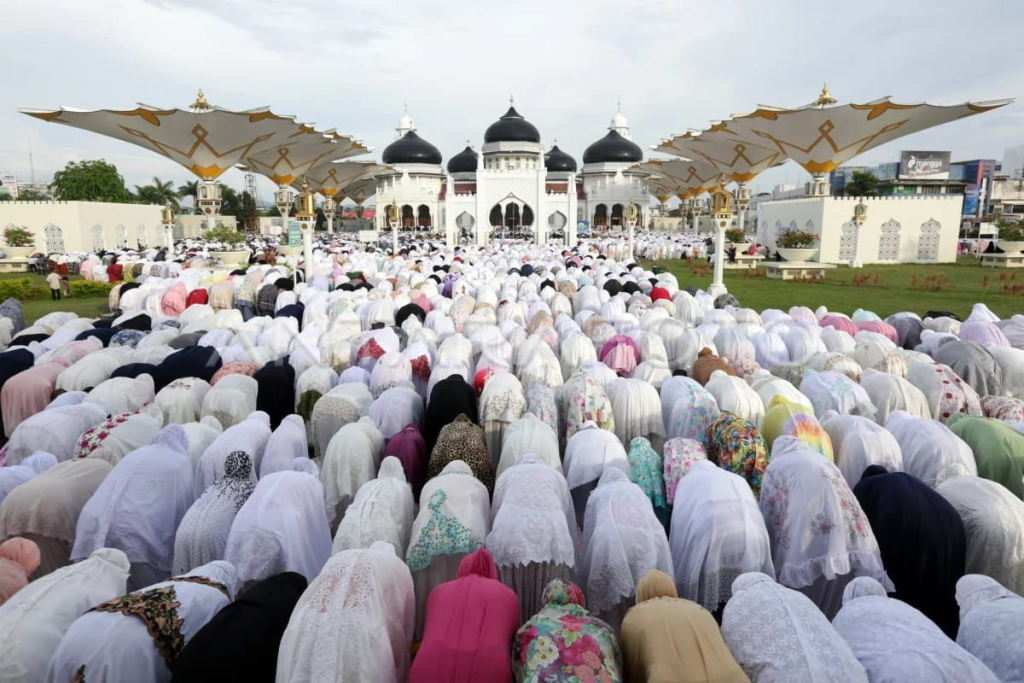
Guide to Eid al-Fitr prayers is a moment eagerly awaited by Muslims after fasting for a full month during Ramadan. In addition to being a day of victory, Eid al-Fitr is also a time to strengthen bonds and increase gratitude to Allah SWT.
One of the main acts of worship performed on the morning of Eid al-Fitr is the Eid al-Fitr prayer. This prayer has great significance as it symbolizes the unity of Muslims in celebrating this day of victory.
In order for our worship to be more perfect, it is important for us to understand the intentions, pillars, and sunnah of prayer. Let’s take a look at the complete guide below, Safarfriendly friends.
What is Eid al-Fitr Prayer?
Eid al-Fitr prayer is a two-rakah sunnah prayer performed on the 1st of Shawwal after sunrise until just before noon. This prayer is usually performed in congregation at a mosque, field, or open space so that many Muslims can participate.
This prayer has several differences from other sunnah prayers, particularly in the number of additional takbirs performed in each rakaat.
In addition to being a highly recommended sunnah act of worship, Eid prayer also serves as a moment for Muslims to gather in an atmosphere of joy and brotherhood.
Intention for Eid al-Fitr Prayer
Before performing the prayer, we must first recite the intention in our hearts. This intention signifies our sincerity in performing the worship.
The following is the recitation of the intention for Eid al-Fitr prayer:
Intention as an imam
“Ushalli sunnatan li’idil fithri rak’ataini imaman lillahi ta’ala.”
Meaning:
“I intend to perform the sunnah Eid al-Fitr prayer of two rak’ahs as an imam for the sake of Allah Ta’ala.”
Intention as a follower
“Ushalli sunnatan li’idil fithri rak’ataini ma’muman lillahi ta’ala.”
Meaning:
“I intend to perform the sunnah Eid al-Fitr prayer of two rak’ahs as a follower for the sake of Allah Ta’ala.”
Intention for praying alone
“I intend to perform the two-rak’ah sunnah prayer for Eid al-Fitr for Allah Ta’ala.”
Meaning:
“I intend to perform the two-rak’ah sunnah prayer for Eid al-Fitr for Allah Ta’ala.”
Safarfriendly friends do not need to recite the intention aloud, as the intention is sufficient when present in the heart at the start of prayer.
The Pillars of Eid al-Fitr Prayer
In general, the pillars guide to Eid al-Fitr prayers are the same as the pillars of prayer in general. Here are some of the pillars that need to be observed:
- Intention
- Takbiratul ihram
- Standing for those who are able
- Reciting Al-Fatihah
- Ruku
- I’tidal
- Two prostrations
- Sitting between the two prostrations
- Final Tashahhud
- Salam
However, there are additional takbirs in this prayer that are characteristic of this worship.
In the first rakaat, after takbiratul ihram, there are seven additional takbirs.
Meanwhile, in the second rakaat, there are five takbirs before reciting Al-Fatihah.
Between each takbir, it is recommended to recite the following dhikr:
“Subhanallah walhamdulillah wala ilaha illallah wallahu akbar.”
This makes the prayer feel more solemn and full of reverence for Allah SWT.
Sunnahs
In addition to the pillars that must be fulfilled, there are several sunnahs that are recommended before and during prayer. These sunnahs will increase the reward and perfection of our worship.
Here are some sunnahs that you can practice:
1. Take a bath before leaving for Eid prayer
Taking a bath on the morning of Eid al-Fitr is recommended so that the body is clean and fresh during worship.
2. Wearing the best clothes
Islam encourages its followers to wear their best and cleanest clothes when performing Eid prayers.
3. Eating before leaving for prayer
Unlike Eid al-Adha, on Eid al-Fitr it is recommended to eat first before leaving. Muslims usually eat an odd number of dates.
4. Recite takbir
From the night of takbiran until before Eid prayer begins, Muslims are encouraged to recite takbir as a form of glorification to Allah SWT.
5. Walk to the place of prayer
If possible, it is sunnah to walk to the place of Eid prayer.
6. Taking a different route on the way home
One of the sunnahs taught by the Prophet Muhammad SAW is to take a different route when going to and returning from Eid prayers.
Eid al-Fitr prayers are not just a sunnah worship, but also a symbol of togetherness and gratitude after undergoing Ramadan worship. By understanding the intentions, pillars, and sunnahs, we can perform prayers better and more solemnly.
May this guide assist you, Safarfriendly friends, in performing your worship on this day of victory. Let us celebrate guide to Eid al-Fitr prayers with pure hearts, filled with gratitude, and the spirit to become better individuals.
Happy Eid al-Fitr, Safarfriendly friends. May Allah accept all our acts of worship.


